
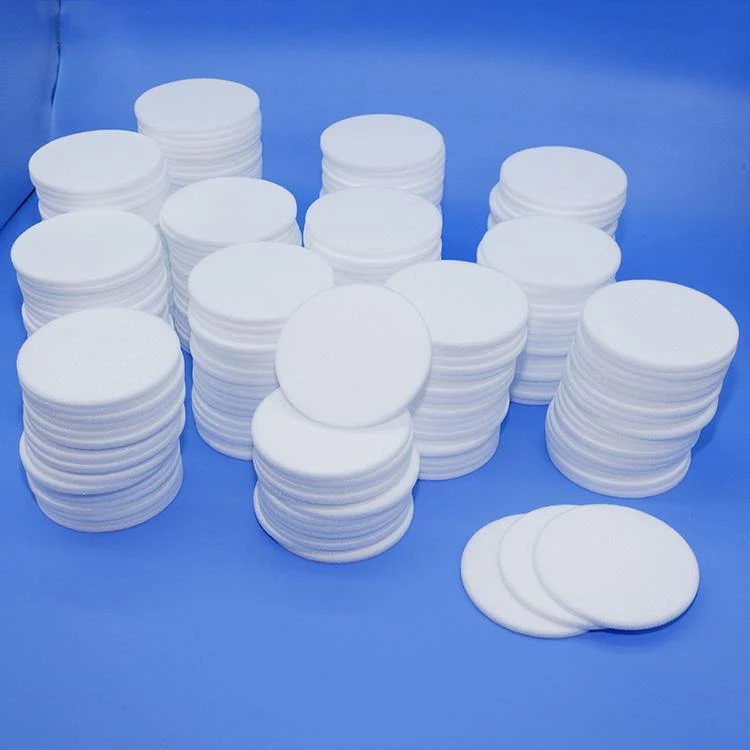
Introduction to Quartz Filters in Modern Operations
In the demanding worlds of heavy industry and advanced scientific research, maintaining the purity of materials and the accuracy of analytical data is paramount. Every operational step, from emissions monitoring to semiconductor manufacturing, relies heavily on the quality of equipment used to separate, purify, and analyze substances. Among the various filtration technologies available today, Quartz Filters have emerged as an indispensable tool. Known for their unique physical and chemical characteristics, these specialized filters bridge the gap between extreme durability and uncompromising purity, ensuring that both industrial plants and high-precision laboratories can achieve reliable, repeatable results even under the most punishing conditions.
Why Quartz Filters Over Standard Filtration Materials?
When engineers and laboratory directors select filtration media, they must weigh factors such as temperature limits, chemical reactivity, mechanical strength, and background contamination levels. Standard cellulose or glass fiber filters often fail when exposed to aggressive chemicals or extreme heat. Quartz filters, however, are manufactured from high-purity quartz microfiber, granting them exceptional resilience.
Thermal Stability and Heat Resistance
One of the primary reasons professionals turn to quartz filters is their extraordinary resistance to high temperatures. While standard glass fiber filters begin to degrade or soften at temperatures exceeding 500 degrees Celsius, quartz filters can withstand continuous operating temperatures up to 900 degrees Celsius or even higher depending on the specific grade. This incredible thermal threshold makes quartz filters ideal for high-temperature flue gas analysis, stack testing, and thermal gravimetric analysis. They maintain their structural integrity without warping, shrinking, or shedding fibers, ensuring that the collected particulate matter remains undisturbed and accurately quantifiable.
Exceptional Chemical Purity and Resistance
Beyond thermal endurance, quartz filters offer superior chemical inertness. Quartz is silicon dioxide in its purest crystalline or amorphous microfiber form, meaning it does not react with most acids, bases, or organic solvents. In analytical environments, even trace contaminants leaching from a filter can ruin an experiment or skew test results. Because quartz filters possess extremely low heavy metal and trace element backgrounds, they eliminate background interference. This chemical purity ensures that any substances detected during post-filtration analysis originate strictly from the sample itself rather than from the filter medium.
Applications of Quartz Filters in Industrial Settings
Industrial operations are often characterized by harsh operating environments, stringent environmental regulations, and the need for continuous, uninterrupted monitoring. Quartz filters play a critical role in helping industrial facilities meet compliance standards while protecting sensitive equipment.
High-Temperature Gas Cleaning and Emission Monitoring
Environmental compliance requires power plants, incinerators, and manufacturing facilities to continuously monitor particulate emissions in smokestacks and exhaust flues. The gases exiting these stacks are often extremely hot and corrosive. Quartz filters are widely deployed in stack sampling systems and continuous emission monitoring systems because they can handle these extreme flue gas conditions. By capturing particulate matter efficiently at high temperatures, quartz filters provide plant operators with accurate data regarding dust loading, heavy metals, and pollutant emissions, ensuring compliance with local and international environmental protection agencies.
Semiconductor Manufacturing and Cleanroom Environments
The production of microchips and semiconductors demands absolute cleanliness. Even microscopic dust particles can ruin an entire batch of silicon wafers. In cleanroom HVAC systems and specialized gas distribution lines, high-purity filtration is essential. Quartz filters are utilized in high-temperature diffusion furnaces and gas purification trains within semiconductor fabrication plants. Their ability to filter sub-micron particles without introducing chemical impurities or particulate shedding helps maintain the ultra-clean environments necessary for modern electronics manufacturing.
Critical Roles of Quartz Filters in Laboratory Environments
While industrial applications emphasize durability and compliance, laboratory operations focus heavily on precision, reproducibility, and trace-level detection. In analytical chemistry and environmental testing laboratories, quartz filters serve as the gold standard for several critical procedures.
Gravimetric Analysis and Particulate Matter Testing
Gravimetric analysis—determining the mass of a substance by measuring its dry weight before and after filtration—requires filter media that do not absorb ambient moisture or lose mass during ignition. Quartz filters have very low moisture absorption rates and are dimensionally stable. When used in ambient air monitoring for particulate matter, such as PM2.5 or PM10 sampling, quartz filters ensure that volatile organic compounds and moisture do not artificially inflate or deflate weight measurements. Researchers can rely on these filters to provide consistent, defensible data for air quality studies.
Analytical Chemistry and High-Purity Sample Preparation
In modern analytical laboratories, techniques like Inductively Coupled Plasma Mass Spectrometry (ICP-MS) and X-ray Fluorescence (XRF) can detect trace elements down to parts per billion or even parts per trillion. At such sensitive levels, the purity of the sample preparation materials is critical. Quartz filters are frequently used to clarify aggressive acid digests and organic extracts prior to instrumental analysis. Because the quartz matrix does not leach extraneous ions into the liquid sample, analytical chemists can trust that their test results reflect true sample composition without filter-induced artifacts.
Maintenance and Best Practices for Longevity
To maximize the performance and cost-effectiveness of quartz filters, laboratories and industrial facilities must implement proper handling and maintenance protocols. Although quartz is remarkably durable, the microfibers can be fragile if mishandled.
Operators should always use clean forceps or gloved hands when handling quartz filters to prevent skin oils and contaminants from altering sample weights or contaminating purity assays. Furthermore, when storing quartz filters, keeping them in a clean, dry environment protected from mechanical abrasion is essential. For high-temperature applications, gradual heating and cooling cycles can help prevent thermal shock, further extending the operational lifespan of the filter assembly.
Conclusion
In summary, quartz filters represent a vital component across a diverse array of demanding industrial and laboratory workflows. Their unique combination of extreme thermal stability, chemical inertness, and high filtration efficiency makes them irreplaceable in environments where standard materials fail. Whether an industrial plant is monitoring high-temperature stack emissions for environmental compliance or a research laboratory is conducting ultra-sensitive trace metal analysis, quartz filters provide the reliability and accuracy required for success. By investing in high-quality quartz filtration solutions, operations can enhance data integrity, maintain regulatory compliance, and safeguard equipment performance for years to come.